History repeats itself once again.
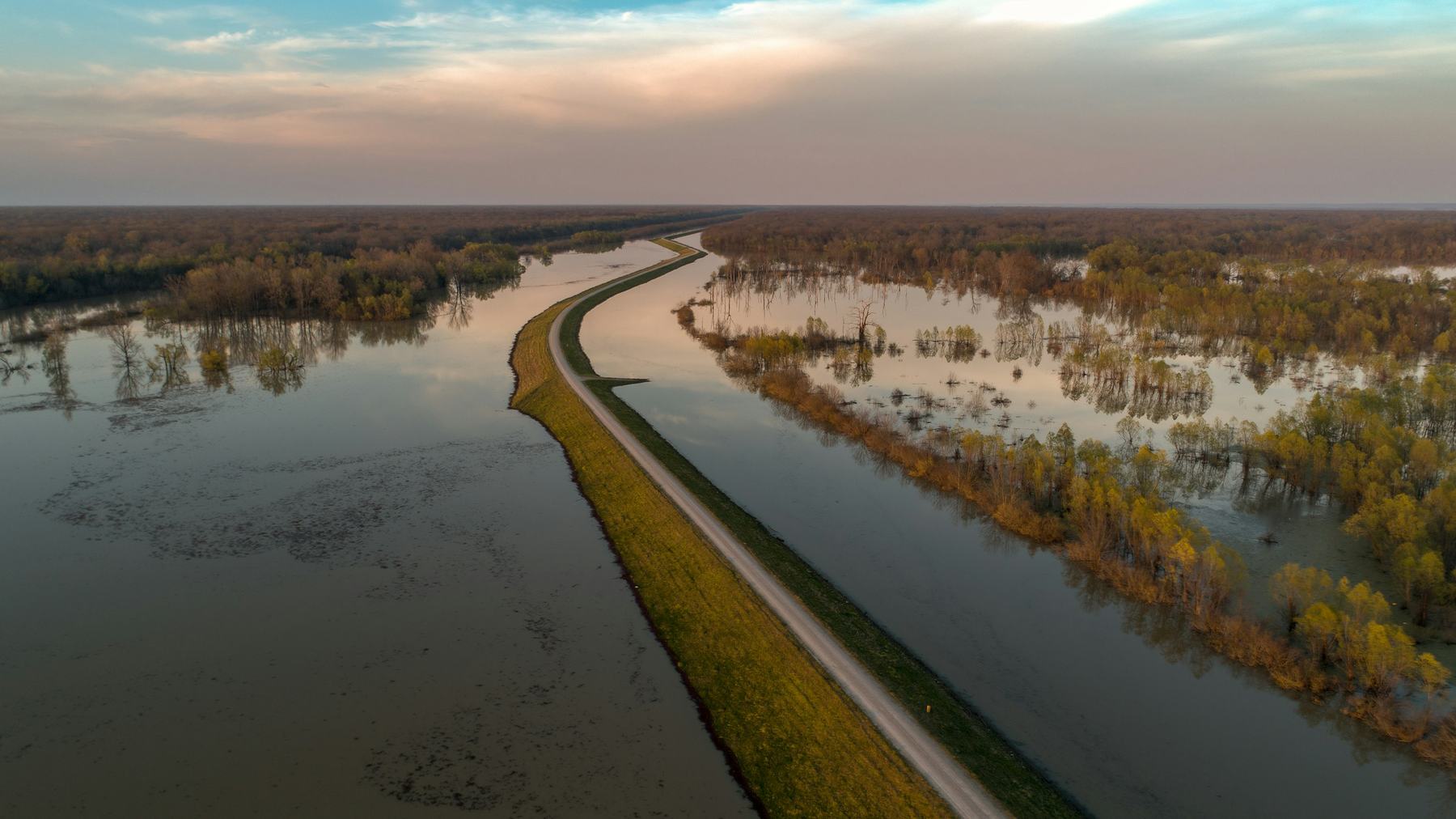
In the winter of 1861–62, a 43-day run of storms filled California’s Central Valley with water and left parts of the state flooded for up to six months.
How it unfolded.
-
December 1861
The storms begin.
A series of storms starts hitting California. It doesn’t let up for 43 days.
-
January 10, 1862
Sacramento goes under.
Floodwater sweeps through the capital on the day Leland Stanford is to be inaugurated as governor. The ceremony goes ahead. He gets there by rowboat.
-
January 22, 1862
The government leaves.
Unable to work in a flooded city, the legislature gives up and moves to San Francisco to wait out the water.
-
The months after
An inland sea.
Water covers the Central Valley across an area at least 300 miles long and 20 miles wide. In the south, the Santa Ana River spreads into a sheet of water four feet deep around Anaheim. It stays for four weeks.
-
The seven years after
Sacramento rebuilds higher.
The city raises its downtown district by 10 to 15 feet.
“The entire valley was a lake extending from the mountains on one side to the coast range hills on the other.”
Ten megastorms in 1,650 years.
A flood this size leaves a layer of silt behind. Scientists have read those layers in the Santa Barbara Basin, San Francisco Bay, the Sacramento Valley and the Klamath Mountains. They show megastorms in these years.
-
212The earliest one found so far.Stronger than 1861–62
-
440228 years later.Stronger than 1861–62
-
603163 years later.Stronger than 1861–62
-
1029426 years later. The longest gap.Stronger than 1861–62
-
c. 1300About 271 years later.
-
1418About 118 years later.Stronger than 1861–62
-
1605187 years later. At least 50% more powerful than any other on record.The strongest
-
1750145 years later.
-
181060 years later.
-
1861–6251 years later. The shortest gap.